Ultra Short Throw Laser Projector 4K: Buyer Checklist
An ultra short throw laser projector can fill a wall from a few inches away, which makes it appealing for living rooms where a traditional projector would be in the way. The projector is only half of the setup, though, and the screen you pair with it shapes how the picture looks day to day. This checklist walks through the decisions that matter most before you spend money.
How to Choose the Right Setup
Start with the room, not the product page. Measure the wall or floor space where the image will land, and note how far the projector will sit from the screen. Ultra short throw designs are built for very short distances, so the screen must be sized to match the projector's throw and the width of your seating area. If you expect to change the size later, look for a screen that adjusts across a range rather than one fixed dimension.
Next, decide how much daylight the room gets. Ambient light rejecting, often called ALR, screens are designed to reduce the effect of light coming from other directions, so they suit rooms with windows or lamps that cannot be fully darkened. A plain screen can work well in a dedicated media room with blackout curtains, and it usually costs less. Think about how you plan to watch, too, since a bright room and a dark room call for different screen choices.
Finally, consider how the screen will live in your home. Floor-rising screens disappear into the floor when not in use, which helps if you want the room to look normal during the day. Electric tension screens with motorized mounting give a cleaner look but need a power outlet and enough clearance for the mechanism. Fixed frame screens are simpler and have no moving parts, which suits a permanent theatre room where the screen never needs to be hidden.
Common Mistakes to Avoid
The most frequent error is buying a screen that does not match the projector's intended use. Check that the screen is described as compatible with ultra short throw laser projectors and that the resolution it is labelled for, such as 4K, fits what you plan to watch. A screen built for a different throw distance can leave hot spots, uneven brightness, or a picture that does not fill the frame properly.
Another mistake is ignoring the size range. A screen listed with a maximum width may look impressive in a product photo, but your room may only need a smaller image for comfortable viewing. Measure your seating distance and aim for a width that fills your field of view without forcing you to turn your head. Buying the largest screen that fits is not always the best choice for a small room.
Buyers also underestimate installation. Motorized screens need a clear path for the mechanism, a stable floor or mounting point, and a nearby power source. Floor-rising models require you to plan where the housing will sit and how cables will reach the projector. Before ordering, confirm the dimensions, weight, and mounting requirements, and make sure the screen is compatible with the exact projector model you own or plan to buy.
Usage and Care Tips
Position the projector and screen before you do any fine-tuning. Keep the screen flat and level, and check that the projector sits at the correct height and angle for the screen type. A slight tilt can cause uneven focus or keystone distortion, which is easier to prevent than to correct later in the projector settings.
For motorized screens, run the mechanism through its full range a few times after installation and watch for any catching, noise, or uneven movement. Keep the surface clean by dusting it gently with a soft, dry cloth, and avoid pressing on the screen material or letting objects rest against it. If the screen is floor-rising, keep the opening clear of rugs, furniture legs, and cables so the housing can open and close without obstruction.
Finally, take care of the room environment. Keep the projector's vents unblocked, and avoid placing it where it will be bumped by pets or people walking past. Use the room's lighting intentionally, since dimmer lamps and closed curtains will make the most of an ALR surface and any contrast the screen offers. Review your setup every few months to check cable connections and screen movement.
Our top picks: ultra short throw laser projector 4k

2026 New Fresnel ALR Ultra Short Throw Motorized Floor Rising Projector Screen 4K 8K 3D Smart Contro
1213.28 USD
This is a motorized floor-rising screen listed with 4K and 8K compatibility, 3D support, and smart control, priced at 1213.28 USD. It suits households that want a hidden screen that rises on demand and a streamlined setup for a living room.
Buy on AliExpress →
2026 NEW Grey Diamond Projection Screen Frame Screen for UST Ultra Short Throw Laser Projector Good
277.58 USD
This is a grey frame screen with a listed maximum size of 200 inches and a note on good contrast, priced at 277.58 USD. It suits buyers with a dedicated room who want a fixed screen at a lower price point.
Buy on AliExpress →
MIVISION 120 Inch Electric Tension Floor Screen for Ambient Light Rejecting Ultra Short Throw Laser
926.10 USD
This is a 120-inch electric tension floor screen with ambient light rejecting material, priced at 926.10 USD. It suits mid-sized rooms that get some daylight and need a screen that retracts when not in use.
Buy on AliExpress →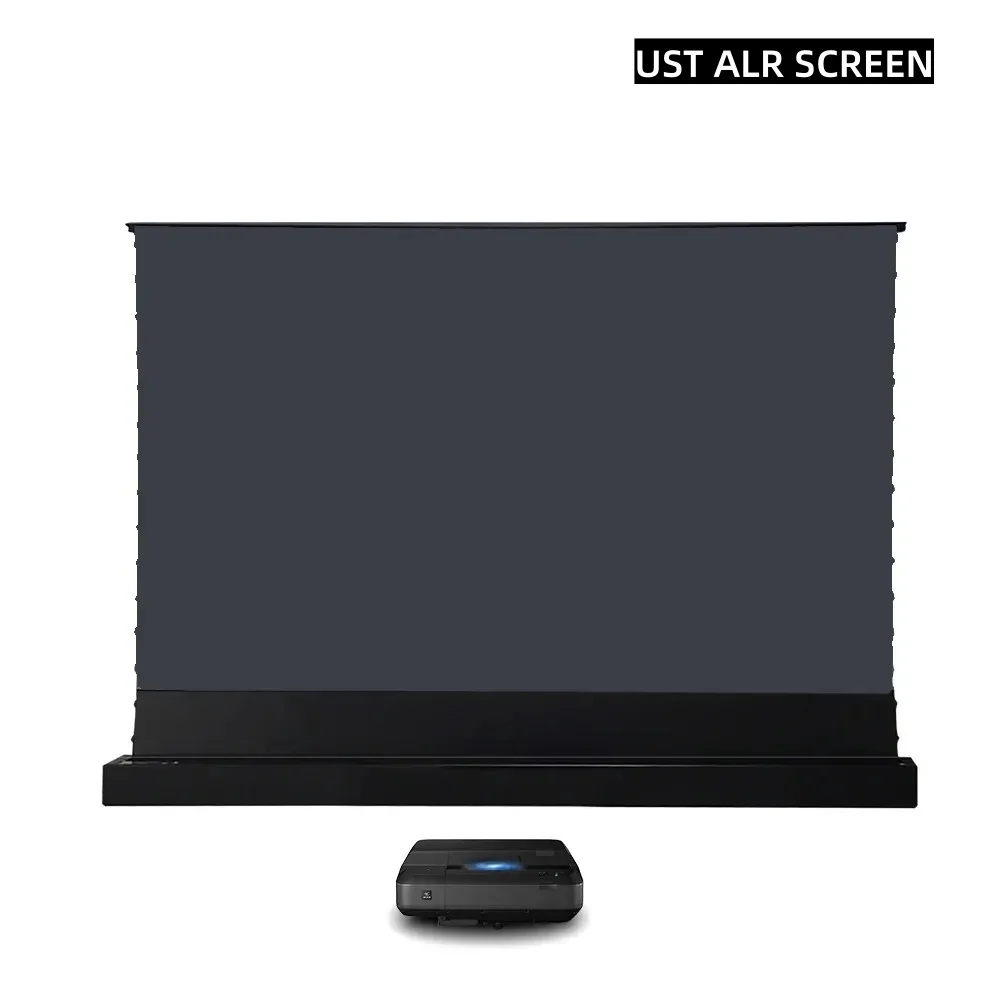
Mivision USTALR085 Floor Rising Ultra Short Throw 4K ALR UST Projector Screen Mi Laser Projector Hom
2073.39 USD
This is a floor-rising ALR screen from the USTALR085 model line, priced at 2073.39 USD and presented as part of a home theatre system. It suits premium setups where the buyer wants a complete, purpose-built pairing with an ultra short throw projector.
Buy on AliExpress →
Mivision 72 - 150 Inch 16:9 Electric Tension Floor Rising Screen for Ultra Short Throw Laser 4k Proj
1512.19 USD
This is an electric tension floor-rising screen with a 16:9 format and a size range from 72 to 150 inches, priced at 1512.19 USD. It suits rooms where the ideal screen size may change over time or where flexibility in sizing matters.
Buy on AliExpress →Frequently asked questions
Do I need an ALR screen for an ultra short throw laser projector?
Not always. An ALR screen is most useful in rooms with windows or lights that cannot be fully controlled. If your viewing room can be darkened, a standard screen may be enough, and you can save money by choosing a simpler model.
How do I choose the right screen size?
Measure the distance from your seating to the screen and the width of the wall or floor area you have available. Choose a size that fills your field of view comfortably and fits the screen's listed size range. Check that the projector's throw distance matches the screen you select.
Is a motorized floor-rising screen worth the extra cost?
It depends on how you use the room. If you want the screen hidden during the day or need the room to serve other purposes, a motorized model can be worth it. If the room is a dedicated theatre and the screen will stay up permanently, a fixed screen is simpler and avoids moving parts.
Take the time to measure, compare screen types against your room, and confirm compatibility with your projector before buying. A careful checklist now saves time and frustration later.

Comments
Post a Comment